Control Surfaces Located on the Aircraft Wing

Certain conditions must be met in order for the aircraft to remain in the air and for this to continue in a stable manner. In order to stay in the air, airplanes need a lift force equal to their total weight and in the opposite direction. Airplanes produce this lift force thanks to their wings, as we explained in previous articles. In this context, we can mention that it is critical to design aircraft in accordance with the requirements of wing designs.

However, the lift needed when aircraft moves through the air is not constant, and to provide this variability, engineers have tried to meet this requirement by adding additional surfaces to the aircraft wings. However, surfaces were also needed to create additional drag, not only for transport, but also for slowing down the aircraft when necessary.

Airplanes can have different wing configurations as well as different types of tail configurations according to their needs. However, the main task of the tail is not to produce the required transport like the wing, but to provide stability for different flight states by providing the moment balance of the aircraft. Tail efficiency also needs to be increased in some cases, such as wings, in order for the aircraft to change direction, so additional control surfaces are needed on the tail as well as on the wing.

In this article, we will talk about the additional control surfaces on the wing and tail and their functions.

I. Aileron

Aleron is one of the additional surfaces on the wing. It is not expected to contribute to the transportation, its main purpose is to maintain the moment balance during the flight and to provide the roll movement by creating a moment in the x-axis.

With the opening of one of the alerons and closing of the aleron on the opposite wing, the same directional force couple is formed on the wing in the z-axis, and with the moment created by this couple of forces, the aircraft can maneuver around the x-axis. When needed, there can be 2 alerons on a single wing, one is located in the root region of the wing, the other is closer to the tip region, and the aleron at the wing tip is generally larger in size and the aircraft maneuver is completed by using the aleron required for the moment required for the maneuver.

II. Flap

Airplanes need different lift forces for different situations during their movements in the air. In some cases, flaps can be used to increase the lift on the wing.

Flaps basically contribute to the increase of the lift produced by increasing the wing surface area thanks to their movement. When the formulas of the transport and drag coefficients are examined, we see that a derivative related to flap opening affects these coefficients.

There are four types of flaps with different logic:

a. Plain Wing Flap
b. Fowler Wing Flap
c. Split Wing Flap
d. Slotted Wing Flap

a. Plain Wing Flap

The most common type of wing flap is plain. Plain wing flaps are characterized by a basic hinge-like design. In their default state, plain wing flaps remain parallel to the surface of the wings with which they used. Pilots, of course, can adjust them. Plain wing flaps can be lowered to increase drag. Lowering plain wing flaps will result in more drag and, therefore, a slower airspeed.

b. Fowler Wing Flap

Some airplanes have fowler wing flaps. Fowler wing flaps are distinguished from plain wing flaps by their slotted design. All slotted wing flaps have multiple slots through which the air can flow. This slotted design allows the wings to produce more lift. Air can flow through fowler wing flaps more easily so that the wings produce more lift. Commercial jets and other wide-body airplane are oftenly use fowler wing flaps.

c. Split Wing Flap

Split wing flaps aren’t as common as plain or fowler wing flaps. In the past, though, they were often used on military airplanes. And you can still find some military airplanes with split wing flaps. Split wing flaps feature a hinge at the bottom, which allows them to pivot. They can pivot up or down on this hinge.

d. Slotted Wing Flap

The main difference lies in the number of slots they have. While fowler wing flags have multiple slots, slotted wing flaps have a single slot. This single slot is found at the hinge. When a slotted wing flap is extended, the slot opens. This open slot offers a passage through which air can flow.

All airplanes have wing flaps. Some of them have plain or fowler wing flaps, whereas others have split or slotted wing flaps. Wing flaps are simply the adjustable flaps on an airplane’s wings.

III. Flaperon

Flaperon can basically be defined as a piece that can handle the task of flap and ailerone alone. It takes part in both increasing the lift force and stability of the moment balance. It is used in hobby planes and mini unmanned aerial vehicles, as well as on the trailing edge of some commercial aircrafts.

IV. Slat

It is one of the elements on the wing. It contributes to reducing the speed by increasing the drag force on the wing. It is generally used in aerial operational situations that require a reduction in speed – such as landing.

V. Rudder

Rudders are one of the control surfaces on the tail of aircraft. It is located in the vertical tail, called the vertical stabilizer. No lift contribution is expected from aircraft tails in terms of performance. Since their main task is to maintain the moment balance of the aircraft, this movement surface does not contribute to the transport. It is the control surface that is responsible for the rotational motion of the aircraft in the z-axis relative to the aviation axis. This movement is called yaw moment.

VI. Elevator

Like the rudder, the elevator is one of the control surfaces on the tail. It is located in the horizontal tail, which is called the horizontal stabilizer. Basically, its task is to balance the moment movement of the aircraft in the y-axis with respect to the aviation axis. Since it is one of the derivatives of the lift coefficient, it contributes to the transport, although not as much as the flaps, but since it is also a derivative of the drag coefficient, it also creates an increase in drag. As a result, its main task is to provide the pitch moment balance of the aircraft.

VII. Ruddervator

Ruddervator are a control surface that we usually see on v-tail aircraft. Since the V-tail is a structure that we usually encounter in unmanned aerial vehicles and delta-wing warplanes, it is possible to encounter the radiator in this type of aircraft. As a basic logic, this control surface works as a mixture of radar and elevator. While it sounds good logically, the use of this control surface requires dexterity. In addition, it contributes to the increase in the maneuverability of the aircraft.

VII. Elevon

Elevon basically appears as the control surface of the elevator and alerone mixture. It can be seen in delta-wing aircraft and unmanned aerial vehicles. It is a difficult to use control surface like a radiator, but it also contributes to maneuverability.

The control of all these control surfaces described here is provided by the console and pedals located in the cockpit. It would not be wrong to say that they are easier to use for pilots in more electronic-based aircraft manufacturers such as Airbus. However, piloting mastery is critical.

Stay with science and knowledge.

Writer: Berkay Çakır

Editor: Halit Yusuf Genç

What is Mesh Structure

When we look at the structural analysis and flow analysis programs, we see that it is a structure that works by solving the equations related to the problem to be solved by numerical methods. Here, the input values ​​and properties differ for each part of the geometry, and iteratively solved with numerical methods and a stepwise solution is achieved for each point. The structures that allow the geometries to be introduced to analysis programs are actually the structures we weave around our own geometry, similar to a spider web, and are called mesh.

Speaking for the analyses, we see that the geometry is divided into these mesh particles and the solutions are made on them. In fact, many parameters such as how long the solution will take and how reliable its accuracy will be vary depending on this mesh structure. The mesh structure can consist of triangular and rectangular pieces for 2 dimensions. Each of these parts represents an element, and for mesh structures, how many elements they consist of is critical to the solution.

Structural Mesh vs Fluid Mesh Difference

If a comparison is made between Structural Analysis and flow analysis, it is seen that flow analysis equations are more complex than structural equations. In order to better observe the features of the flow at different points, it would be better to create a more detailed and good mesh structure than structural analysis. However, in order to carry out the structural analysis, the geometry should be knitted with a square mesh structure, that is, it should be covered with a structured mesh. In flow analysis, it is possible to solve with both structures called structured or unstructured mesh.

What Should Be Considered While Meshing

As we mentioned above, we can say that having a good mesh structure means ensuring the accuracy of the solution. Of course, the setup and boundary conditions we will create for the solution are as important as the mesh structure, but the mesh structure is important as it is the first step.

Is a mesh with more elements always better for the same geometry and problem? It is one of the important questions for understanding the logic of mesh structure. It is not always the case that a high-element mesh is a good better mesh. In cases where it is not necessary, excessively discarded mesh structures may have no effect other than prolonging the solution time. For the number of mesh elements, the optimum number of elements should be determined by the process we call independence from the mesh, and this number should be processed.

Mesh Independence Process

The ideal mesh element number is tried to be determined while making the mesh independence process. In this process, the same solution scheme is repeated by creating mesh structures with different number of elements. It is tried to find the ideal number of elements by reducing the number of elements between the number of elements that give similar and correct results.

Important Parameters

There are some parameters that are as important as the number of elements for mesh structures. These are Aspect ratio, Skewness and Orthogonal Quality values.

Aspect Ratio

Aspect ratio is one of the parameters to be considered while creating the mesh structure. For some solvers (e.g. OpenFoam) the aperture ratio must be kept below a certain value. The aspect ratio is a measure of the stretching of a cell. It is computed as the ratio of the maximum value to the minimum value of any of the following distances: the distances between the cell centroid and face centroids, and the distances between the cell centroid and nodes.

Skewness

The skewness value is one of the values ​​that should be especially checked. It represents the height to base ratio for triangular mesh elements. While making the solution, the skewness value must be less than 1 as it will create an impossible triangular element and cause an incorrect solution. For this value, the range of 0.5 – 0.8 is considered ideal.

Orthogonal Quality

Orthogonal quality is computed with vector mechanics. The program makes calculations by using the face normal vector. The vector from the cell centroid to the centroid of each of the adjacent cells. And the vector from the cell centroid to each of the faces. It sounds complex. But what you need to know about ‘Orthogonal Quality’ is, that 0 is the worst and 1 is the best.

Boundary Layer for Flow Analysis

Speaking specifically about flow analysis, the flow progresses by forming certain boundary layers while moving on geometries. Generally, in flow problems, the most critical parts are characterized as boundary layer parts, so these parts must be carefully modeled in the mesh structure. While forming the boundary layer in the mesh structure, as a result of determining the parameters such as the first layer thickness, the boundary layer is formed by increasing the layer thickness with a certain increase rate. While determining the number of layers of the boundary layer, the element dimensions of the mesh structure formed around the boundary layer are taken into account, and the number of layers is determined by trying to capture the square geometry for the structured mesh structure and the equilateral triangle geometry for the unstructured mesh structure in the last layer. While determining the first layer thickness, the so-called Y+ value is used and this value should generally be less than 1. The parameters affecting the Y+ value are given in the formula set below.

As seen here, Y+ value depends on velocity drag, dynamic viscosity value and first layer thickness. By entering the desired Y+ value, the first layer thickness is calculated and inflation is tried to be created over this calculation.

Stay with science and knowledge.

Author: Berkay Çakır

Editor: Halit Yusuf Genç

What is Lift Force and How Is It Formed

When the aerodynamic forces are examined in 2 dimensions the force in the z direction, with respect to the aviation axis system, is called the lift force, and the force in the x direction is called the drag force. In this article, we will focus on the lift force in the z direction.

Before talking about lift force, if we examine how aerodynamic forces occur for a 2-dimensional airfoil. These are two simple natural resources;

a. Shear stresses (Friction)
b. Pressure distribution over the surface

The current flowing around the object creates friction. Shear stress is defined as the force per unit area acting tangentially to the surface due to friction. It is a point feature, it changes along the surface, and the unbalance of the surface shear stress distribution creates an aerodynamic force on the body.


When the velocity profile on the wing is examined, positional velocity changes create pressure distributions in 2 dimensions. When examined for an airfoil, the difference between the upper wing pressure and the underwing pressure provides the formation of aerodynamic forces. This pressure difference, which occurs mostly, has been tried to be explained through the Bernoulli equation. Air accelerating on the upper surface of the wing creates a low pressure area. As a result of this difference created by the high pressure area on the lower surface of the wing, the lift force is formed. However, this does not happen in symmetrical profiles if there is no angle of attack. For this reason, no lift force is produced for 0 angle of attack in symmetrical wing profiles.

When looking at the formula of the lift force:

It is expressed by the formulation. In this context, we can say that the lift force varies depending on the dynamic pressure, reference area and lift coefficient. The lift force coefficient is expressed by the formulation given below:

When we look at the formulation, we see that the carry coefficient depends on the angle of attack, the angle changes on the control surfaces, the alphadot, q and Mach numbers. All the derivatives and effects seen here also affect the lift force. Here α is called the angle of attack. It is the angle that the airfoil makes with the flow and is critical for the lift coefficient. δ_f and δ_e represent the displacements of the elevator and flap elements in radians. q represents the angular velocity on the y-axis. The expression c/(2V_a ) is the expression that provides the alpha derivative and q terms as nondimensional expressions. where c is the chord length and V_a is the wind speed.

Considering the change of the lift coefficient with the angle of attack, a linear change is seen for the small angle of attack range (α<8^°), while a more parabolic increase is seen at the high angle of attack. After a certain angle of attack, flow separations begin to appear and the lift coefficient decreases, a phenomenon called a stall, and stall angles are available for certain airfoils.

Stay wih science and knowledge,

Author: Berkay Çakır

Editor: Halit Yusuf Genç

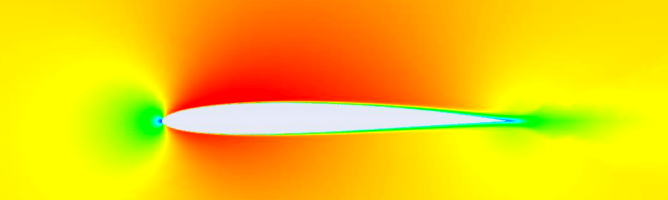
Aerodynamics 2021 Fall Term Project: Thin Airfoil Theory Application on NACA 1609 and Comparing With ANSYS Fluent CFD

Greetings everyone. This time, I wanted to share with you my Aerodynamics course project assignment that I took in the Fall semester of 2021.

In this project, I found the margins of error by comparing the Thin Airfoil Theory calculations and 2D ANSYS Fluent analyzes that I made for NACA 1609 over Cd and Cm values. I have done this analysis and calculations over and over again for different angle of attack values, different Reynolds values, and different mesh qualities. (Instead of doing the analyzes one by one over ANSYS in this way, parameter assignment could also be made to obtain only the numerical outputs.)

I did not want to make an Inviscid solution in my CFD analysis, so the amount of difference between the two methods varied between 9-14%. I put a lot of effort into making a report that includes analysis steps, mesh qualities and all kinds of other details for people who want to analyze similarly. I hope it helps you and I hope I have prepared everything in a clear way. For detailed information and examples with the Thin Airfoil Theory, you can review the “4.8 THE CAMBERED AIRFOIL” section of the Fundamentals of Aerodynamics book written by Jonh Anderson.

Those who are curious can read the entire report, there may be points that I wrote incorrectly or that I did not notice while writing the report. I am always open to other people’s opinions.

I wish everyone a happy and healthy day 🙂

Link for LinkedIN share: NACA 1609 Airfoil Analysis

Stay with science and knowledge.

What Is Solar Cycle ?

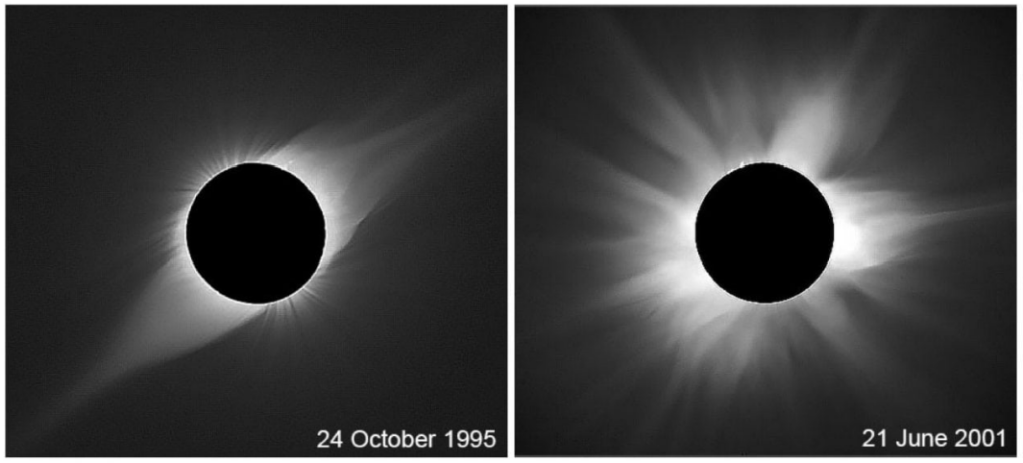
The solar cycle, also known as the sun’s magnetic activity cycle, is a periodic change that occurs every 11 years, determined by the amount of change in the number of sunspots observed on the sun’s surface. In this cycle, the times when the sunspots are the least are called the solar minimum, and the times when they are the most are called the solar maximum.

Solar Minimum – Solar Maximum

During periods of high sunspot activity, light beams are more evenly distributed with the sun’s corona; If the solar minimum is at its minimum, the corona and light beams are concentrated at the sun’s equatorial latitudes.

The large-scale dipolar (north-south) magnetic field component of the Sun, which accompanies the 11-year semi-periodicality of sunspots, also reverses every 11 years.

This cycle has been observed for centuries by terrestrial phenomena such as changes in the Sun’s appearance and auroras. Driven by both the sunspot cycle and temporal aperiodic processes, solar activity governs the environment of the Solar System planets by creating space weather and creating space and ground-based technologies, as well as the Earth’s atmosphere and also possibly climate fluctuations over the centuries.

Understanding and predicting the sunspot cycle remains one of the greatest challenges in astrophysics, with major implications for space science and the understanding of magnetohydrodynamic phenomena elsewhere in the Universe.

Stay with science and knowledge.

Halit Yusuf Genç

Sources:

https://www.haberler.com/fotogaleri/gunes-in-en-net-fotografi-cekildi-6-000-derece/

https://tr.wikipedia.org/wiki/G%C3%BCne%C5%9F_d%C3%B6ng%C3%BCs%C3%BC

https://evrimagaci.org/gunes-nedir-gunesi-ne-kadar-taniyoruz-8006

Why Does The White Smokes Come Out When Space Shuttles Are Launched?

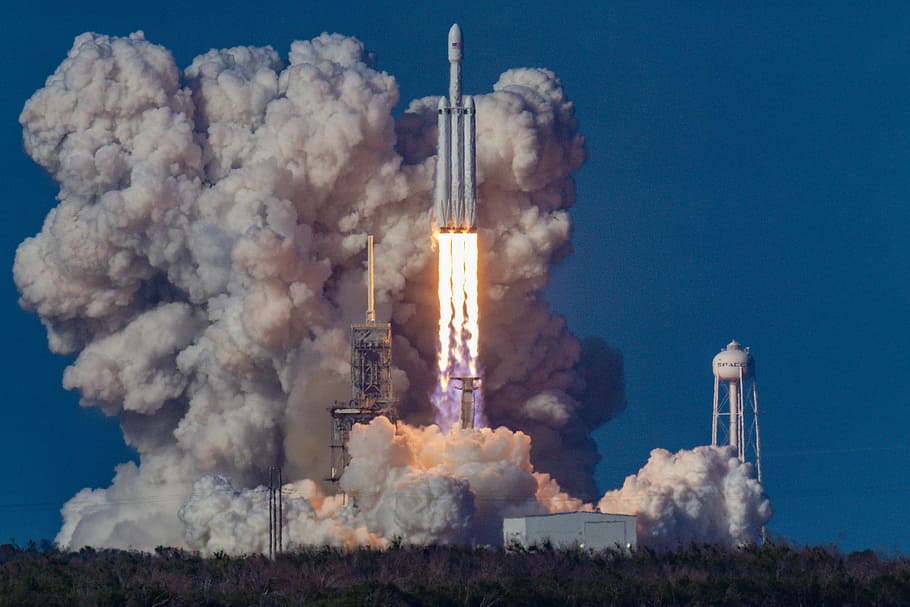
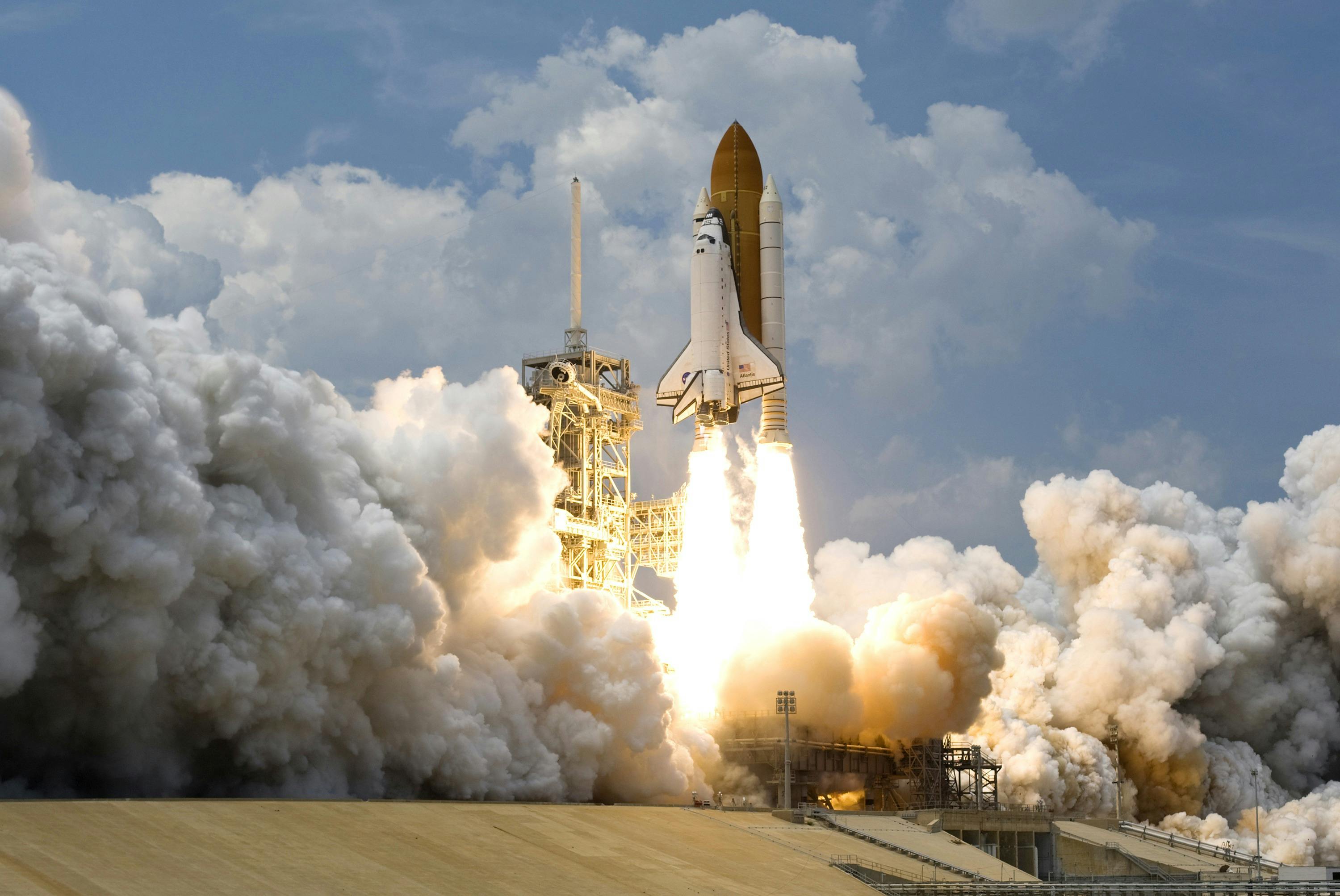
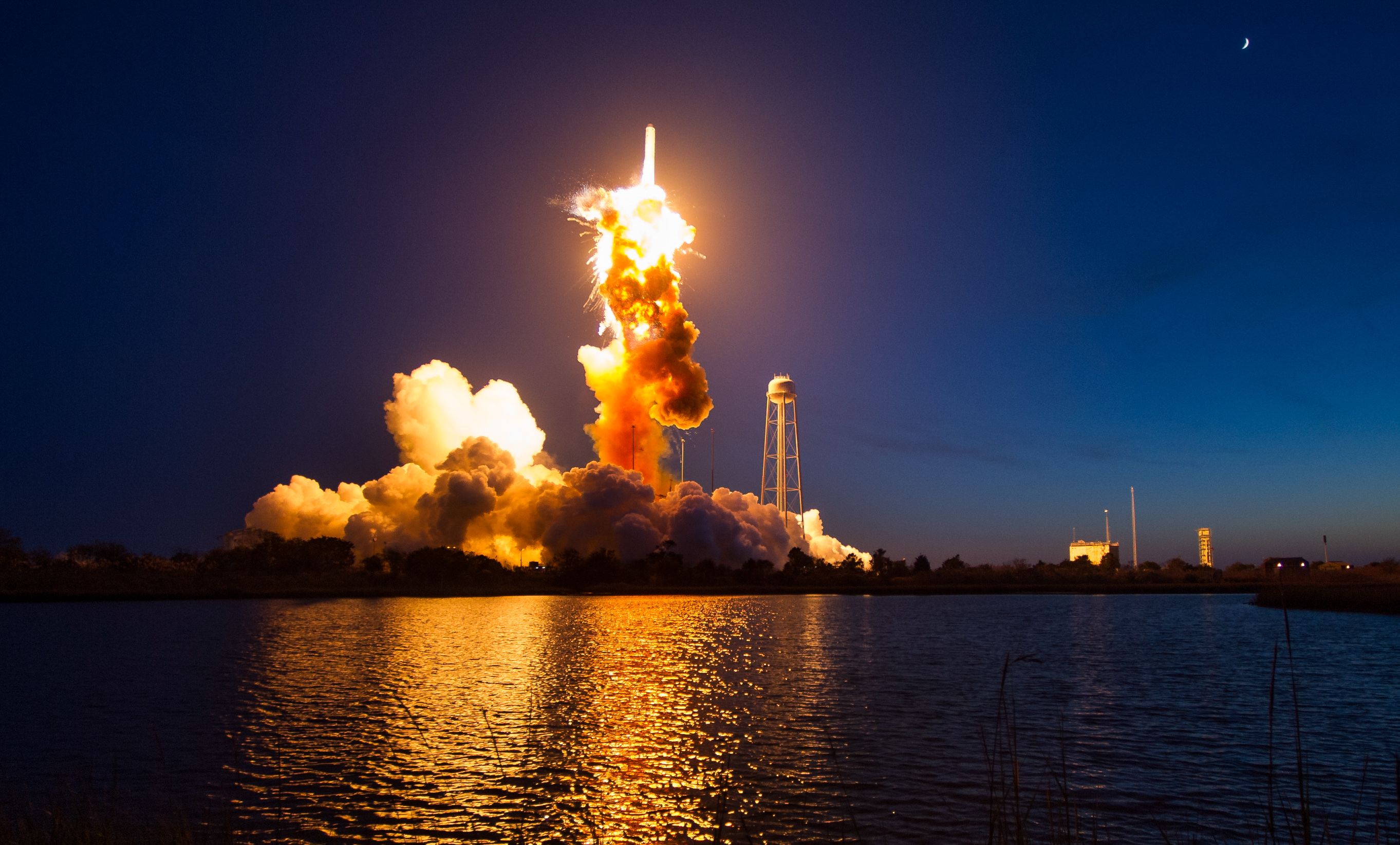
If you’ve ever seen a rocket launch, perhaps a similar question came to your mind at that time: What is this cloud of white smoke that comes out as the rocket takes off, how and why does it form?

See the source image

First of all, it should be noted that during the firing of these gigantic space shuttles and rockets, the emergence of high sound and pressure waves is inevitable due to the sudden temperature. These waves are so intense that they can cause serious damage to our space structures and even cause them to explode if they hit the ground and reflect back to the shuttle or rocket. The intensity of the sound waves can cause surrounding pipes to burst, walls to crack, and connections to loosen.

In order to eliminate this situation, a Water Sound Suppression System has been placed just below the launch platforms in order to absorb these sound and pressure waves.

See the source image
Water Sound Suppression System

This system floods the launch area with thousands of gallons of water at critical moments during firing, serving two purposes as such:

To prevent flames from spreading to surrounding structures and to prevent damage caused by sound waves.

See the source image

Water filled under the rocket at the time of ignition; It absorbs the energy generated by absorbing sound and pressure waves and allows the space shuttle or rocket to take off without any problems. Meanwhile, due to the high heat generated in the rocket’s ignition engines, this water mass evaporates very quickly and that white cloud of smoke that we can see emerges.

Attempting to fire a rocket without this system will result in the equivalent of an earthquake and fire occurring around the launch site. Worse case, as a result of the whole rocket being exposed to fire, it will explode with the fuel inside and everything will go to waste and cause a chaos with fire.

Stay with science and knowledge.

Halit Yusuf Genç
Sources:

https://www.nasa.gov/audience/forstudents/9-12/features/F_Preventing_Fires_on_the_Launchpad.html

Ventilation Holes for Supersonic Rockets

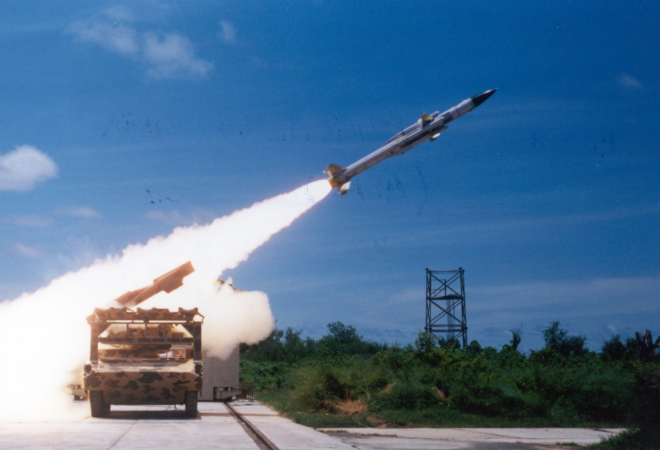
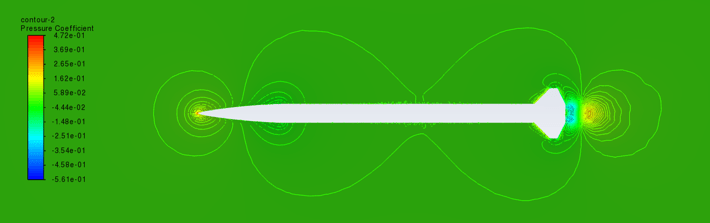
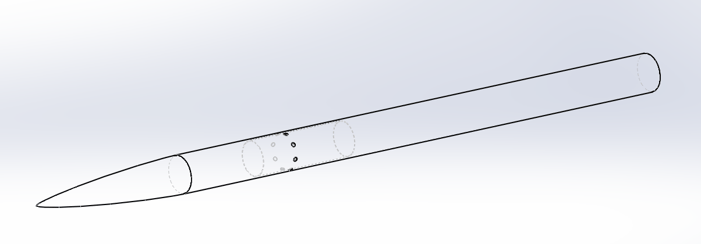
In this research report, we shared with you a detailed and exemplary research process that examines why rockets that exhibit supersonic flight need air vents, what these holes are for, where and how they should open.


During a long research process of about 2 months, we wanted to present the report as clear and clear as possible by dealing with stages such as reading detailed articles, ANSYS analysis, Openrocket and SOLIDWORKS designs.

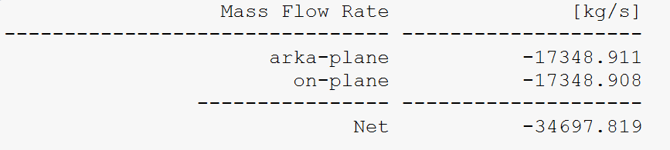
Here is some preview of my analysis:

Stay with science and knowledge.

Halit Yusuf Genç

Space Based Solar Energy

Rapid population growth in the world causes many and big problems. One of the biggest problems is the increasing energy demand from year to year. Today, this energy, which is mostly met by fossil fuels, will run out in time and cause serious damage to the environment.

Considering these situations, it is seen that it is necessary to search for new energy sources.

At this point, Space-Based Solar Energy, which emerged to meet the global energy needs and end carbon dioxide emissions, is considered as a very suitable source for the future.

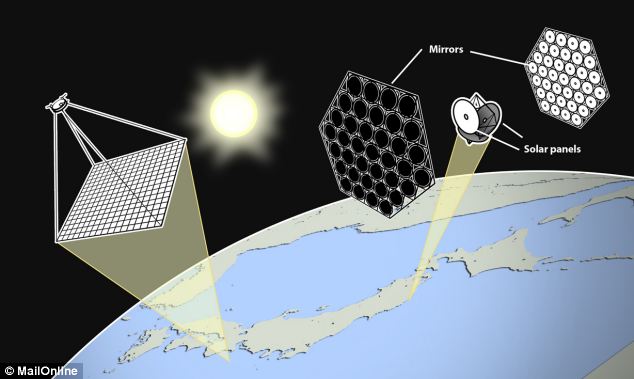
This system, put forward by Dr. Peter Glaser, aims to transform the electrical energy obtained by the Sun into a microwave, transmitting this microwave to the receiving antenna on the earth by using phased array antenna elements and converting it back into electrical energy.

The most striking feature of this system, which has many advantages, is that Space-Based Solar Energy systems will be able to collect this energy without being caught in the sun’s rays, since they will be located outside the atmosphere. Sun rays falling on modern solar panels; Atmospheric gases pass through clouds and other weather events and fall into these panels and therefore suffer great losses along the way. And besides, a solar panel design independent of the day and night cycle will be able to produce energy uninterruptedly, unlike solar panels on Earth.

However, despite all these advantages, this idea has still not been realized. There are a few simple reasons for this:

The very high costs of such technology make it highly unlikely to invest in them. Especially since the repair and maintenance costs of the energy generation and distribution systems in orbit are very high, and the astronauts who will have to work on them are exposed to high levels of radiation, these investments make these investments risky. If autonomous maintenance robots are to be produced instead of human workers, the flexible solution behaviors of humans will be lost and the calculated budget cost will increase considerably.

To reduce this cost, in the early 1970s, Gerard O’Neill drew attention to the problem of high launch costs and proposed to build SPS (Solar Power Satellite) in orbit with materials from the Moon. He suggested that launch costs from the Moon could be much lower than from Earth due to the low gravity and lack of atmospheric drag.

On April 30, 1979, NASA concluded in a report entitled “Lunar Resources Utilization for Space Construction” prepared by General Dynamics Convair division under NAS9-15560 that the use of lunar resources would be cheaper than Earth-based materials. there was. However, the prices were still too high.

Another problem is that technologies such as power generation and wireless energy transmission are not yet at a sufficient level in order for these designs to be used more than other energy sources. As long as it is not possible to re-transfer the energy to be obtained from space to the Earth, the project will not promise a solution.

Stay with science and knowledge.

Halit Yusuf Genç
Sources:

Supersonic Speed Rockets Research Report

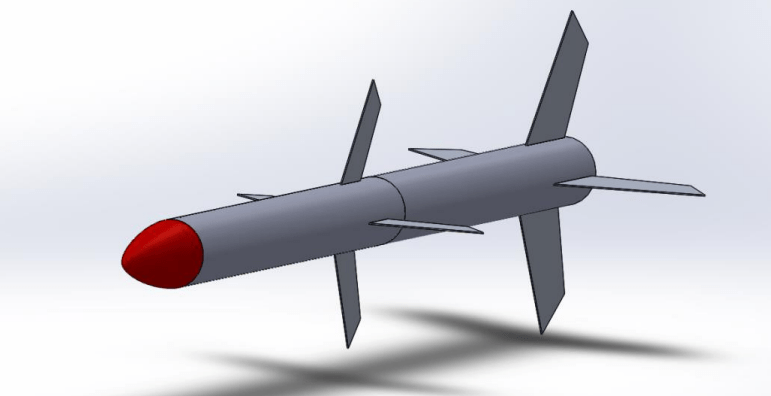
In this research report, we will talk about the methods followed in the aerodynamic design processes of rockets that exhibit supersonic flight and the appropriate designs obtained according to these researches.

Stay with science and knowledge.

Halit Yusuf Genç
Multiple Fin Assembly Analysis Report

This analysis report is the first report I wrote as a member of the PARS Rocket Group.

It is a detailed aerodynamic examination of why more fins are not used in standard rockets, rather than three or four.

This report; going beyond the classical rocket designs, which have now become a standard inthe rocketry industry, preferred due to its practicality and various advantages, designed as four equal-sized fins attached to the lower body; the effect of a larger number of additional winglets positioned in different places than the standard fins on the general flow and flight was examined, and the analyzes obtained through Openrocket and Ansys applications were shared on the basis of these examinations.

Some Preview Pictures:

All rights reserved. Necessary actions are taken against people who use it without permission or without attribution.

Stay with science and knowledge.

Halit Yusuf Genç