
Greetings everyone. This time, I wanted to share with you my Aerodynamics course project assignment that I took in the Fall semester of 2021.
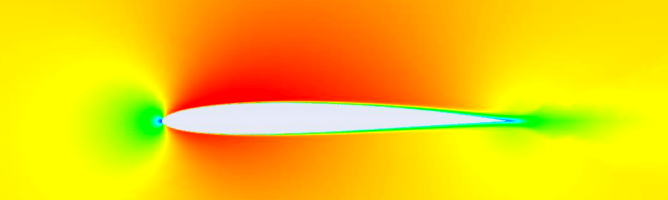
In this project, I found the margins of error by comparing the Thin Airfoil Theory calculations and 2D ANSYS Fluent analyzes that I made for NACA 1609 over Cd and Cm values. I have done this analysis and calculations over and over again for different angle of attack values, different Reynolds values, and different mesh qualities. (Instead of doing the analyzes one by one over ANSYS in this way, parameter assignment could also be made to obtain only the numerical outputs.)
I did not want to make an Inviscid solution in my CFD analysis, so the amount of difference between the two methods varied between 9-14%. I put a lot of effort into making a report that includes analysis steps, mesh qualities and all kinds of other details for people who want to analyze similarly. I hope it helps you and I hope I have prepared everything in a clear way. For detailed information and examples with the Thin Airfoil Theory, you can review the “4.8 THE CAMBERED AIRFOIL” section of the Fundamentals of Aerodynamics book written by Jonh Anderson.

Those who are curious can read the entire report, there may be points that I wrote incorrectly or that I did not notice while writing the report. I am always open to other people’s opinions.
I wish everyone a happy and healthy day 🙂
Link for LinkedIN share: NACA 1609 Airfoil Analysis
Stay with science and knowledge.
 Engineer For Space