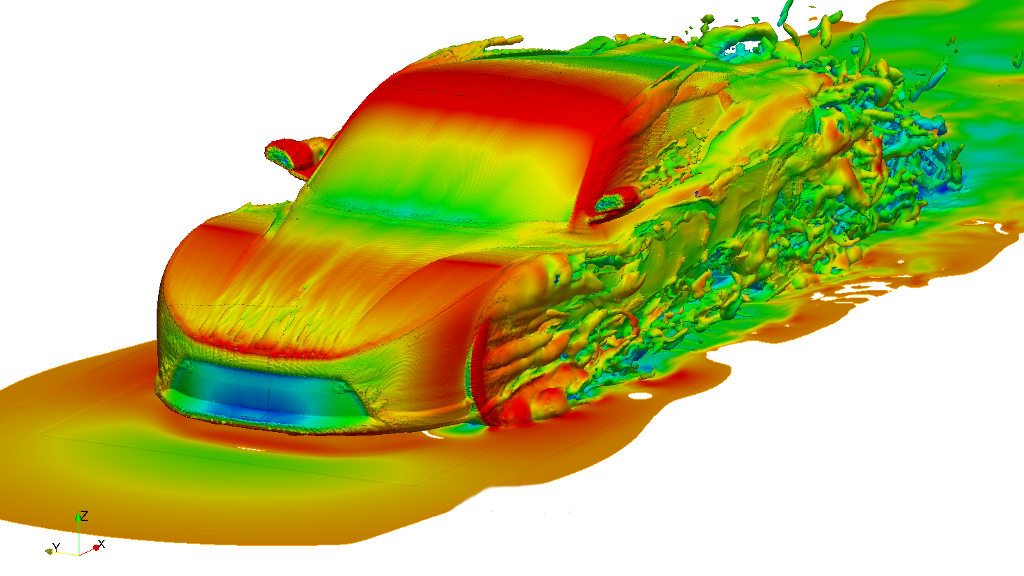
As science began to classify the natural dynamics and related reactions of air, water, or gas, the physics of fluid dynamics continued to develop. This provides a system structure with rules of thumb and is derived from the idea of flow measurement to solve practical problems. Typical fluid dynamics problems involve basic fluid properties related to time and space, such as flow rate, pressure, density, and temperature.
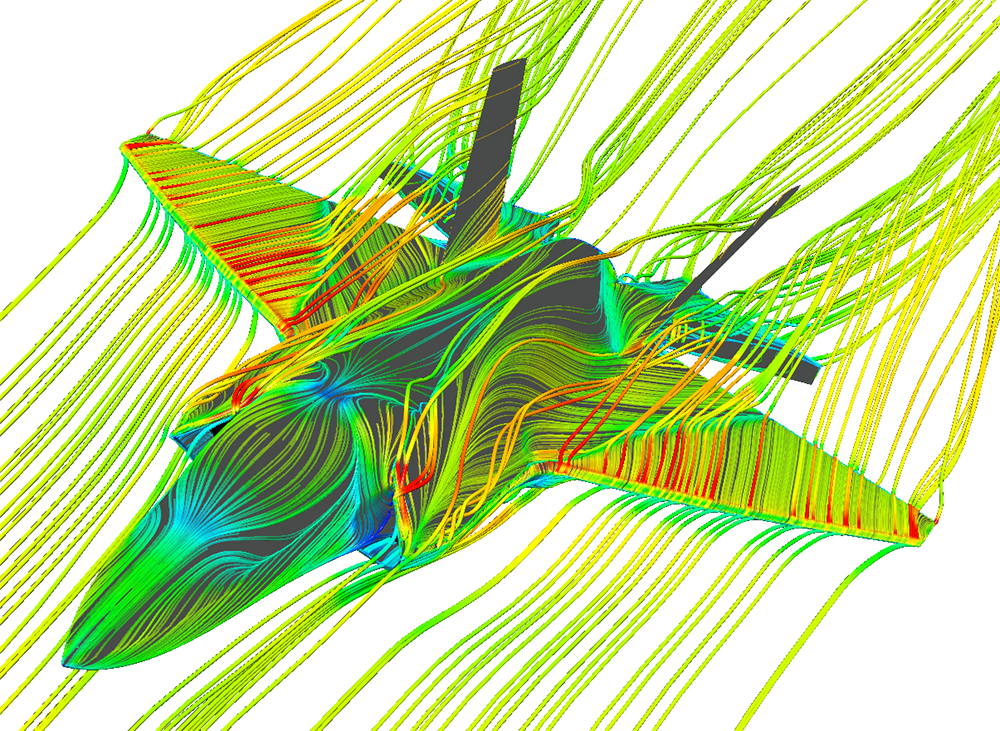
In daily life, we can find fluid flow in meteorology (rain, wind, flood, hurricane), heating, ventilation and air conditioning, aerodynamic design, engine combustion, industrial processes or the human body—for example, blood flow-. Fluid dynamics has a wide range of applications, including calculating forces on airplanes, determining the mass flow of oil through pipelines, and predicting weather patterns.
The flow behavior of gases and liquids is quantified by partial differential equations, which represent the laws of conservation of mass, momentum, and energy. Computational fluid dynamics (CFD) is a branch of fluid mechanics that uses numerical analysis and algorithms to solve fluid flow conditions. Use a high-performance computer to perform the required calculations to simulate the interaction of liquids and gases with surfaces defined by boundary conditions.
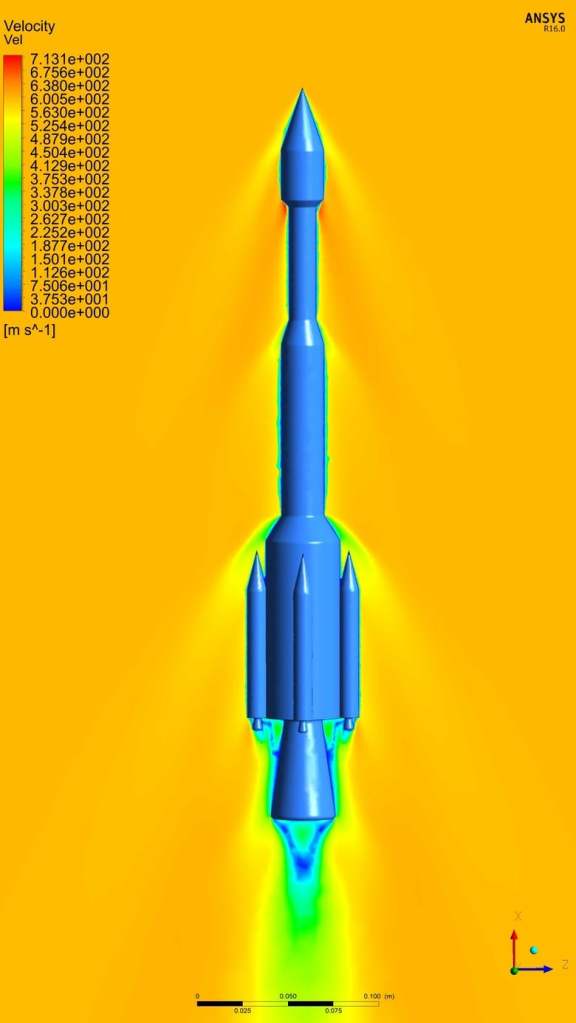
The CFD software is based on the Navier-Stokes equation. Since Newton’s second law is applied to fluid motion, coupled with the assumption that the stress in the fluid is the sum of the diffusion viscosity term and the pressure term, these equations describe the velocity, pressure, temperature, and density of the moving fluid.
The development of CFD and the increase of CFD software applications are closely related to the development of high-speed computers.
With a CFD analysis, we can understand the flow and heat transfer throughout the design process. The basic methodology for any engineering CFD software analysis is based on a few procedures:
• Understanding flow model — Flow separations, transient effect, physical interactions;
• Proving assumed model — Experimental results validation, parametric studies, structural simulations;
• Model optimizing — Reducing pressure drops, flow homogenization, improving laminar and turbulent mixing.
Without numerical simulations of fluid flow, it is very difficult to imagine how:
• Meteorologists can forecast the weather and warn of natural disasters;
• Vehicle designers can improve aerodynamic characteristics;
• Architects can design energy-saving and safe-living environments;
• Oil and gas engineers can design and maintain optimal pipes networks;
• Doctors can prevent and cure arterial diseases by computational hemodynamic.
So we can say with certainty that CFD analysis is very critical in many areas such as engineering, weather, R&D, medicine. The profession of CFD analyst, which has now become a specialized field, also receives high salaries in many parts of the world. This is an indication of the need for them.
Stay with science and knowledge.
Halit Yusuf Genç
Sources:
 Engineer For Space