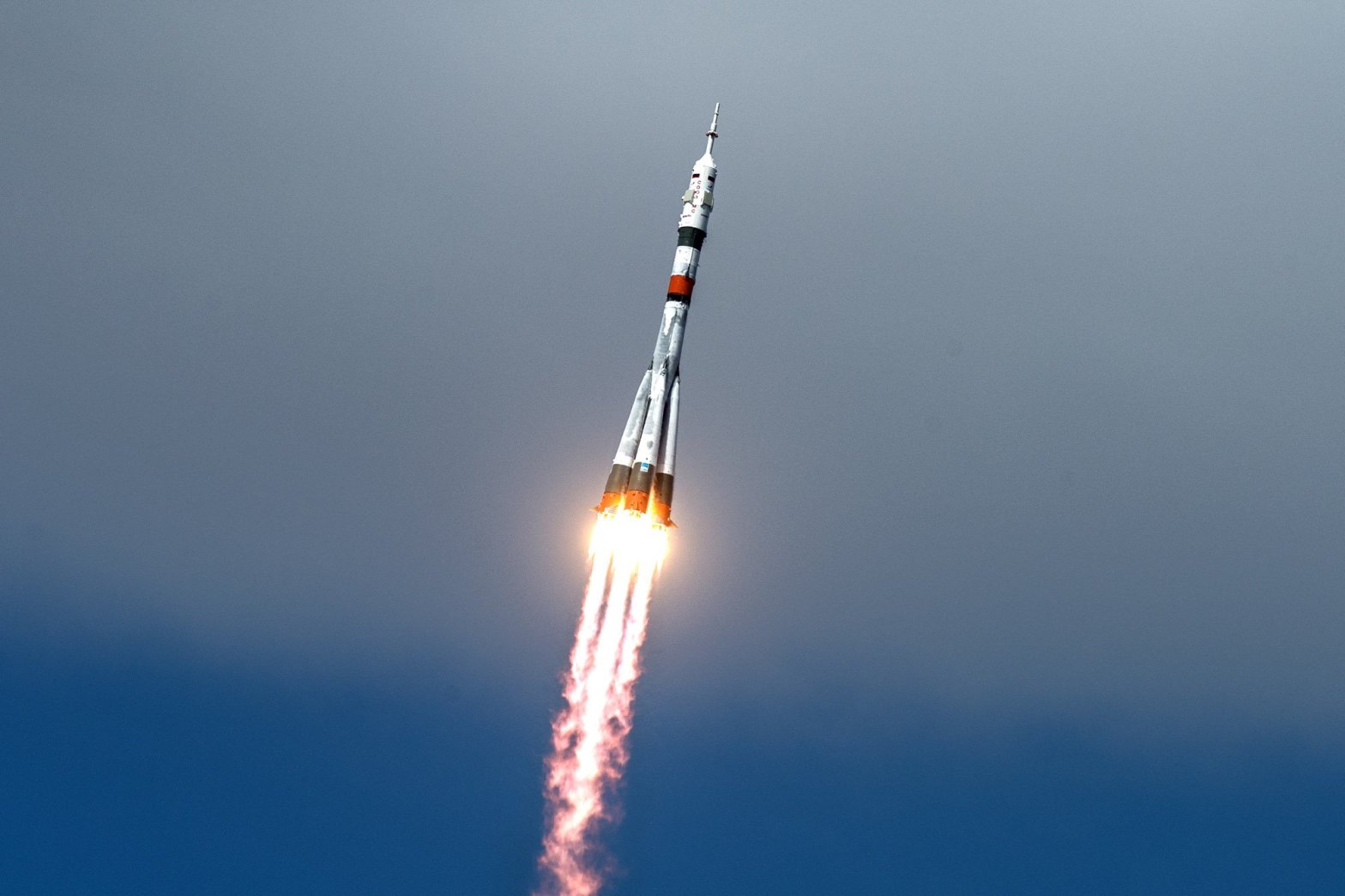
A hybrid-fuel rocket is a rocket using different rocket fuels in different phases in the rocket engine. One of these fuels is in solid form and the other is in gas or liquid form. The emergence of the hybrid rocket can be traced back to 1940s.

In its simplest form, a hybrid rocket engine consists of a pressurized boiler (tank) containing liquid oxidizer and a combustion chamber containing solid rocket fuel and a mechanical device that separates them. When propulsion is required, a suitable ignition source is introduced into the combustion chamber and the valve in between is opened. Liquid (or gas) fuel flows into the combustion chamber and evaporates there, then interacts with the solid fuel. Combustion takes place in a boundary layer propagation flame adjacent to the surface of the solid fuel.
Generally, liquid rocket fuel is used as an oxidizer and solid rocket fuel as fuel because solid oxidizers are very dangerous and are less efficient than liquid oxidizers. In addition, the use of solid fuels such as Hydroxyl Terminated PolyButadiene (HTPB) or paraffin wax makes it possible to add high energy fuel additives such as aluminum, lithium, and metal hydrides.
Hybrid rockets not only overcome the disadvantages of solid propellant rockets, such as the dangers associated with the transport of fuel, but also avoid the disadvantages of liquid propellant rockets, such as the mechanical complexity. Hybrid rockets fail more safely (without explosion) than liquid or solid fuel rockets because it is very difficult to mix the fuel and oxidizer (due to their different states of matter) homogeneously. Like liquid fuel rocket engines, hybrid rocket engines can be easily switched off and their thrust amounts / levels can be adjusted. The theoretical specific impulse efficiency of hybrids is generally higher than solid fuel engines and less than liquid fuel engines. High specific propellant values of up to 400 seconds were measured in hybrid rocket engines using high metal content fuel. Hybrid systems are more complex than solid ones, but because of the separate storage of the oxidizer and fuel, they overcome the significant hazards that can occur during production, long-distance transport / handling, and physical handling / handling.

Apart from these advantages, there are also disadvantages.
1) Low burning rate. Reacting with oxidizer the fuel entering and burning, expected from the rocket. In terms of generating instantaneous force, solid fuel burn more slowly than motors. This is because combustion occurs with the fuel evaporating from the surfaces and this is that evaporation is not fast enough. But in long-term low power needs (target, such as gas generators) this characteristic behavior is important takes a place.
2) Low core density. Multiple fuel core geometry has been the most common method used to avoid low burning rate. Especially in this application made in engines larger than a foot diameter, the density decreases as the fuel is stored in larger volumes. In addition, unburned inert fuels (fuel sliver) remaining at the ends of each separate geometry reduce efficiency.
3) Combustion efficiency. Compared to liquid and solid fuel rocket engines, the combustion efficiency of hybrid engines is 1-2% lower. However, since the specific impulse value is higher compared to solid fuel rocket engines, the effect of efficiency
remains low.
4) Mixing ratio (O / F). As the combustion surface increases during the combustion (the inner diameter of the fuel core gradually increases and reaches the outer diameter), the fuel mixture ratio deviates from the theoretical value in time. But the beginning
This can be overcome with an appropriate ratio chosen for According to internal ballistic calculations, this deviation is below 1%.
5) Slow transition. Response to power-up (ignition, power change, termination) is usually slow. However, this situation can be ignored in practical application where renewability is more important.
Stay with science and knowledge.
References:
SAMUR, A. E., HACIOGLU, A., KARABEYOGLU, A. (2016). Hi̇bri̇t yakitli roket motoru ateşleme/test düzeneği̇ tasarimi. Aerospace Technologies Journal, 9(1), 25-30.
 Engineer For Space